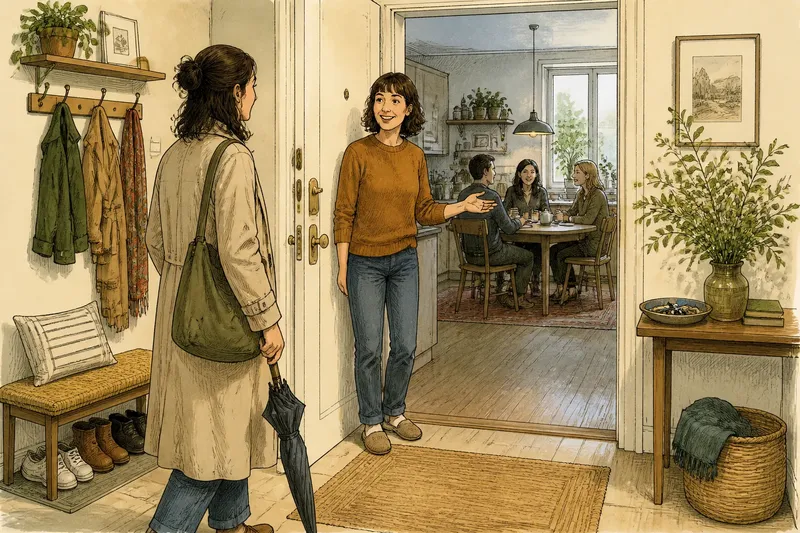
A First Visit to a Neighbourhood Gathering, Without a Full Schedule
A first visit to a neighbourhood gathering feels easier with one arrival point, time to observe and a simple exit plan you can change as needed.
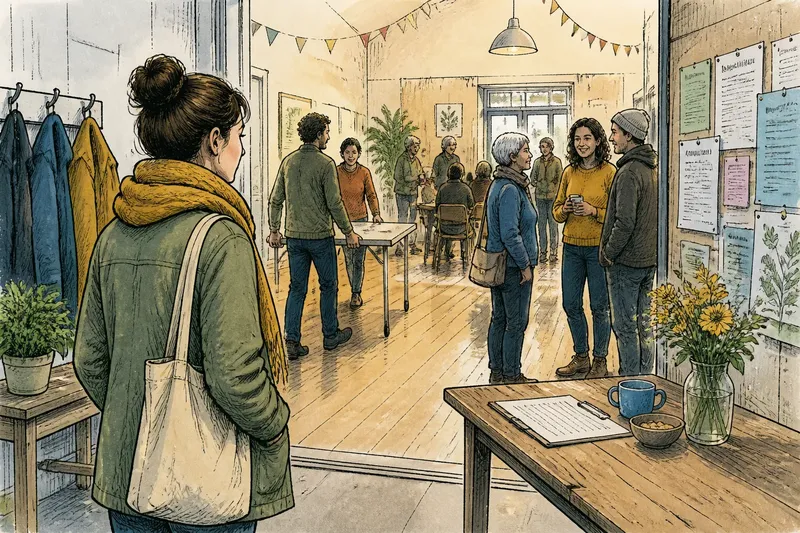
You reach the community hall as a folding table is being carried inside, while a small knot of people chats near the noticeboard. For a first visit to a neighbourhood gathering, you do not need to decide how the whole evening will go. Choose one point of arrival, give yourself room to watch, and know how you can leave if you want to.
That small plan is not a promise to stay or a test of sociability. It is a handrail: something steady enough to help you enter an unfamiliar room without scripting every conversation. The gathering may be a park clean-up, a local choir rehearsal, a residents’ meeting or a casual craft evening. The details differ, but a light structure can make the first few minutes easier.
What should you choose as your arrival point?
Pick one ordinary place where you can pause without blocking the activity. It might be the sign-in table, the coat hooks, the refreshments counter or the edge of a circle of chairs. Having a point in mind gives your attention somewhere to land when the room feels busy.
If the event has a named organiser, ask a simple question beforehand: “Where should a new visitor go when they arrive?” A short message can clarify whether to check in, wait outside for a group walk, or simply come through the open door. If there is no organiser to contact, look for the notice or event listing for practical cues such as an entrance, meeting point or start time.
Think of the arrival point like a bookmark in a book. It helps you find your place, but it does not dictate how long you read. Once you have greeted someone or put your coat away, you can move towards whatever catches your interest.
How can you settle in without rushing to join?
Give yourself permission to observe before taking part. Notice where people leave bags, how the activity is arranged and whether newcomers are being greeted individually or joining in as they arrive. A few quiet moments can help you understand the room’s rhythm without requiring you to stand apart for the whole event.
Choose a place that leaves you comfortable and does not interrupt the gathering. At a gardening meet-up, that could mean standing near the tool table while people sort gloves. At a book swap, it might be the end of a shelf where you can browse and listen. The aim is not to inspect everyone; it is to learn enough about the practical flow to make your next move.
You can also take one modest role if it is offered and suits you: carry a stack of paper cups, add your name to a sign-in sheet, or help pass round materials. A small task can provide a natural reason to be present while leaving space to speak when conversation comes easily. If nobody needs help, simply watching is a perfectly ordinary way to begin.
What can you say when you do not know anyone?
Use the setting as a starting point rather than searching for an impressive introduction. “Is this your first time at this group?” or “How does the seed swap work?” gives the other person something concrete to answer. You can offer your own brief context, such as having seen the event on a library noticeboard.
Keep the first exchange open-ended but light. A neighbour may be busy arranging chairs or concentrating on a task; a short answer does not necessarily mean they are unwilling to talk. Let the moment end naturally, then return to looking around or listening. You are not responsible for keeping every silence filled.
Imagine you arrive at a neighbourhood repair café and do not know anyone. You find the welcome desk, say you are visiting for the first time, and ask where people wait while an item is being looked at. After hearing that visitors can watch from the side table, you take a seat there and listen before deciding whether to join a conversation. The observable result is a clear place to be and a little time to understand what is happening; it does not require you to commit to the whole event.
How do you make an exit plan that feels easy?
Before you arrive, decide on a simple way to leave, not a fixed departure time you must obey. You might plan to stay until the activity changes, leave after a cup of tea, or step out when you have had enough. A flexible cue is often kinder than an exact schedule because gatherings can unfold differently from their notices.
Check the practical route in advance if that would ease your mind: where the door is, whether the venue has a separate entrance, and how you will get home. For a public event, you may want to know whether you can leave and return, or whether the main activity takes place outdoors. These are small logistics, not signs that you expect the visit to go badly.
When you are ready, a brief goodbye is enough: “Thanks for having me; I’m heading off now.” If the organiser is occupied, you can say goodbye to the person nearest you or leave quietly where that suits the setting. You do not need to explain a private reason for going.
What questions help before your first visit?
Should you arrive exactly on time?
Follow the event’s stated timing if it gives a clear start, especially for a walk, talk or organised activity. For an informal drop-in, arriving near the opening can give you a quieter moment to find the organiser, while a later arrival may suit a gathering already in progress.
Is it all right to come alone?
Many local gatherings are open to individual visitors, but the event notice may say if registration or a companion is needed. If that detail is unclear, ask the organiser rather than guessing from photos or descriptions.
What if nobody greets you?
Look for a sign-in sheet, an event host or a visible activity, then make one practical enquiry. If there is no clear way to join and the gathering seems closed to visitors, you can leave and contact the organiser later; you have not failed by noticing the room’s cues.
Do you need to bring anything?
Bring only what the event asks for, such as materials for a shared activity or a reusable cup if the notice mentions one. If nothing is specified, your presence is usually the useful starting point; avoid bringing food or equipment that could create extra work for the host.
How can you keep the plan light?
Before setting out, keep the plan to three decisions: where you will arrive, what you will do while you get your bearings, and how you can leave. Write them in a phone note if that helps, but do not turn them into a minute-by-minute schedule. A plan should take pressure off, not give you another performance to manage.
During the gathering, check in with yourself once or twice. Are you curious about the activity? Would a quieter spot help? Do you want to stay for one more conversation, or is it time to go? You can change your mind in either direction. Leaving early is a complete visit, and staying longer is not an obligation to become instantly familiar with everyone.
For a first visit to a neighbourhood gathering, success can be modest and observable: you found the entrance, learned how the event works, or discovered that this particular group is not for you. Each outcome gives you useful information for deciding whether to return, try another event, or simply keep the noticeboard in mind. If you go again, you can bring the same small plan—or let familiarity take over where it feels natural.