Hosted at Home or Around a Table Elsewhere?
Home or neutral-place gatherings shape privacy, preparation and arrival differently. Choose a setting that lets guests join comfortably and the host stay present.

You have invited a few neighbours to talk, but the dining table is covered with post, and one guest may need to leave early. Choosing between a home or neutral-place gathering is not just a matter of convenience: the setting changes how private the conversation feels, how much preparation falls to the host and how easy it is for people to arrive.
What does the setting ask of everyone?
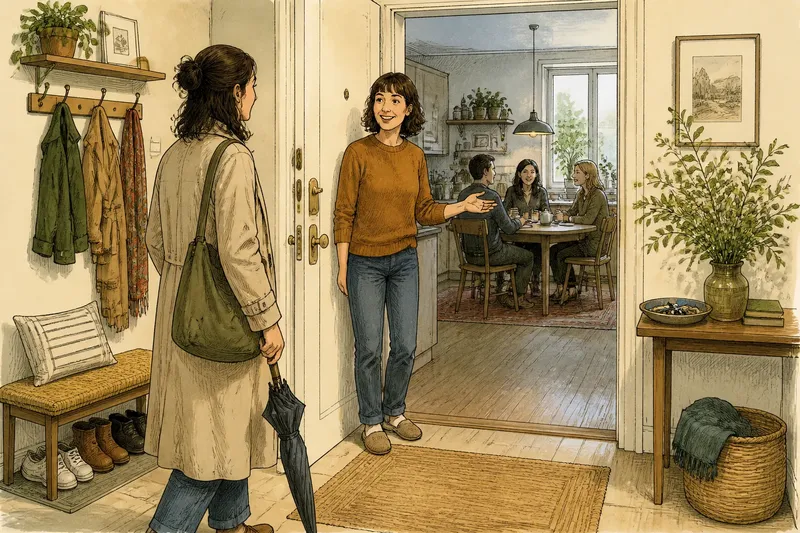
A home gathering places the meeting inside someone’s everyday territory. Guests enter a private space, and the host becomes both participant and custodian: making room, receiving people and keeping an eye on the household. That intimacy can help a conversation feel unhurried, but it can also make a visit feel more personal than intended.
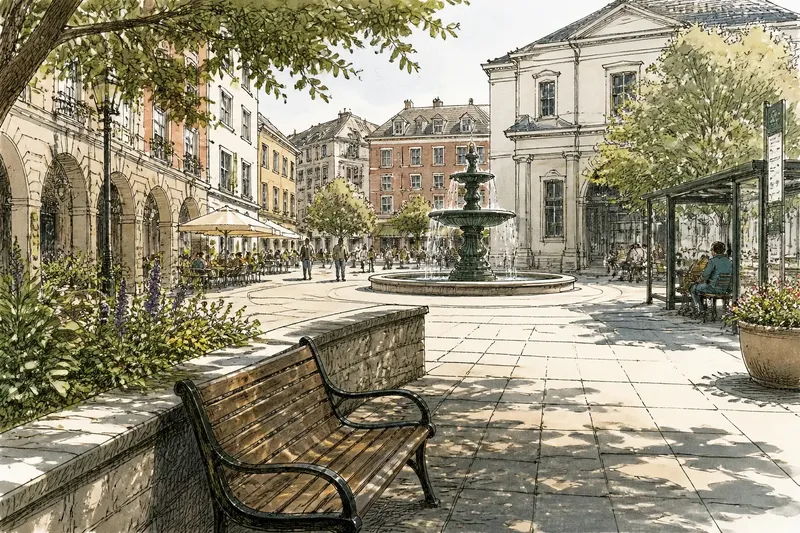
A neutral place is somewhere no guest owns, such as a café, community room or shared courtyard. Its boundaries are already public or agreed, so nobody has to make their home available. Yet the group may have to work around other people, opening hours, noise or a booking arrangement.
Think of the venue as a container. A lidded lunchbox keeps what is inside separate from the rest of the day; an open tray makes it easier to set down and pick up. Neither is better in every situation. The useful question is what kind of contact the group needs, and what demands the container places on those taking part.
How does privacy change the conversation?
At home, small details are visible: family photographs, books, pets or signs of a busy week. They can give guests something natural to talk about and make the meeting feel warm. They also reveal more about the host than a neutral venue would. For a group still getting acquainted, that extra exposure may feel uneven, especially if one person is welcoming others into a home while the rest simply arrive.
A neutral venue gives everyone a degree of separation from their private lives. This can suit a practical discussion or a group whose members do not yet know one another. The trade-off is that privacy may be limited in a different way: other customers can overhear, and a busy room may make it hard to speak freely. A café offers public ease, not confidentiality.
If the subject is personal, consider whether the space allows people to speak without being overheard and whether anyone would feel obliged to disclose more than they wish. A home does not automatically make a conversation private, and a closed community room does not automatically make every guest comfortable. Agreeing what kind of conversation the gathering is for matters as much as choosing the address.
Who carries the preparation?
Home hosting often involves clearing surfaces, arranging seats and making the room usable. Food may be part of the plan, but it need not be. The less the host tries to provide, the more attention they can give to the people who arrive. If preparation begins to feel like a second event, the arrangement may discourage the very person the group relies on to open the door.
A neutral place shifts some work rather than removing it. Someone may need to reserve a room, check whether visitors can enter, or find a table large enough for the group. In a café, each person might buy their own drink; in a community room, the group may need to bring cups or leave the space tidy. These are modest tasks, but making them explicit prevents them from silently landing on one person.
Imagine a neighbour wants to gather three people to discuss a shared garden, but their kitchen is already crowded with boxes. They could ask the local library about a small meeting room and tell everyone where the entrance is. The expected result is a conversation with less household preparation and a clear boundary around the meeting, though the group would still need to check the room’s availability and access arrangements.
What makes arrival feel easy?
A home can be straightforward to locate but harder to enter. Guests may wonder whether to ring the bell, take off their shoes or come in if the door is open. Clear, low-key information in the invitation can remove that uncertainty without turning the welcome into a performance.
Neutral venues have their own points of friction: a confusing entrance, a queue, a room hidden down a corridor, or uncertainty about where the group is sitting. Naming the entrance and an obvious meeting point helps. If someone may arrive late, say whether they should join quietly or message the host first.
Arrival also includes the moment of leaving. At home, a conversation can drift because the setting belongs to the host, and guests may not know when to go. A booked room or café table often supplies a natural boundary, but it can make a relaxed meeting feel time-bound. A simple end time in the invitation gives everyone a shared expectation without requiring a formal closing ritual.
Which gathering suits the purpose?
Use the meeting’s purpose as a guide, rather than assuming one venue is always more welcoming.
- Choose a home when a small group already feels at ease there, the host wants a quieter setting and the preparation is manageable.
- Choose a neutral venue when no one should have to disclose or open their home, when access is easier there, or when a clear start and finish would help.
- Consider a hybrid arrangement when the group needs conversation first and informal social time afterwards. For instance, meet in a community room, then let people choose whether to continue elsewhere.
Access deserves particular attention. Check whether people can reach the venue, find the entrance and use the room comfortably; do not assume that a familiar home or public café works for everyone. If needs differ, ask privately what would make attendance easier, rather than asking someone to explain personal circumstances in front of the group.
What should you ask before choosing?
Does meeting at home make anyone feel exposed?
Consider whether guests know one another well enough for a private setting to feel comfortable, and whether the host genuinely wants to share that space. If either answer is uncertain, a neutral venue can keep the invitation friendly without making a home visit the price of belonging.
Will the host be able to join the conversation?
Think about the work involved in opening the space, receiving arrivals and resetting the room afterwards. If those tasks would keep the host busy, simplify the plan or move the meeting somewhere that distributes the practical load.
Can everyone find and enter the place?
Give a usable address, identify the entrance and explain any relevant access arrangements. For a home, say how to announce arrival; for a neutral venue, name a landmark or meeting point that is easy to recognise.
Does the setting fit the kind of talk planned?
A lively café may suit a casual catch-up but not a conversation people expect to keep private. A quiet home can invite openness, while a reserved room can provide separation without asking anyone to host.
How can the invitation keep the choice generous?
State the venue, the general purpose and what guests need to know, such as whether refreshments are available or people can arrive late. Avoid implying that a home invitation is more intimate or that meeting elsewhere is less friendly. People may have reasons for preferring either arrangement, and they do not need to justify those preferences.
Home or neutral-place gatherings feel different because each setting distributes privacy, preparation and arrival in its own way. Choose the place that lets the host take part and gives guests a clear, comfortable route into the meeting. One useful detail in the invitation—a clear entrance, a settled end time or a simple note about what to expect—can do more for belonging than elaborate hosting.