The Welcome at the Door: Small Cues That Help a Guest Settle
A welcome at the door can ease a guest’s first moments. Use clear, low-pressure cues to show where to go, what to do and when to join in.
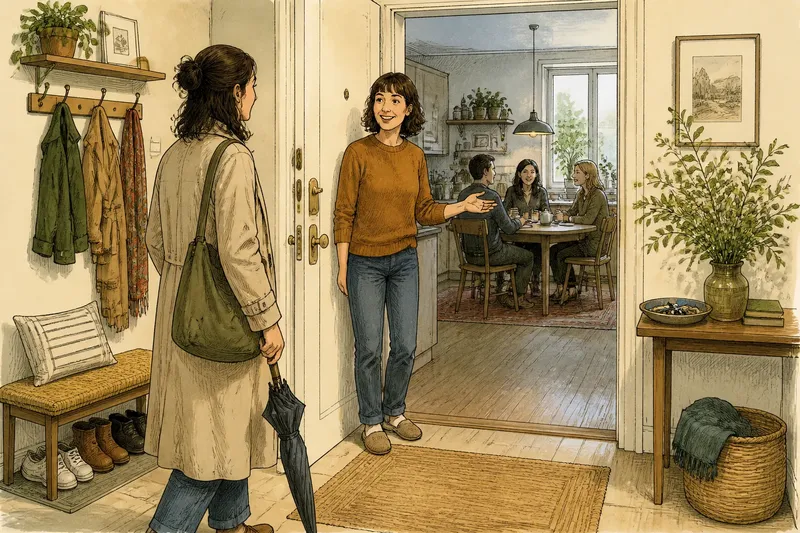
A guest arrives while you are carrying a bowl from the kitchen, and the hallway suddenly feels like a place with too many choices. A welcome at the door works best when it answers the small questions a visitor may not want to ask: where to put a coat, whether shoes come off, and whether to come straight through.
These cues need not be elaborate. A sentence, a visible place for belongings or an easy invitation to pause can make the first moments less awkward without turning the visit into a sequence of instructions.
What should I say when a guest arrives?
Offer one clear next step, then give the guest room to respond. “Come in; you can leave your shoes here, and I’ll take your coat” is easier to act on than a string of questions about what they prefer.
Keep your tone warm but ordinary. A guest may be ready to chat, or may need a moment to take in an unfamiliar room. A simple “You can settle here while I finish this” makes waiting sound intentional rather than like an interruption.
If the guest already knows the household routine, a brief gesture may be enough. Point towards the coat hooks, for instance, instead of repeating instructions they have heard before. The aim is to make the next action legible, not to narrate every detail.
How can I make the entrance easier to read?
Give everyday items a visible home. A clear hook or chair for coats, a tray for keys and a mat for outdoor shoes tell a guest what to do without requiring a conversation. Avoid placing these options behind a closed door or among household clutter if you expect visitors to use them.
Consider what the guest can see from the threshold. If the place to sit is obvious, they can choose it without asking. If a corridor leads to several rooms, tell them which one you are using: “We’re in the sitting room, just through there.” A small verbal signpost is often more helpful than assuming they will follow you.
Household customs can vary, so state the relevant one plainly. If shoes stay on, say so; if you would like them removed, show where they can go. When a preference depends on an item’s label, the maker’s directions or local rules, follow that guidance.
How do I make an invitation feel low-pressure?
Use language that leaves a genuine choice. “Would you like to come through, or take a minute here?” offers two simple options. By contrast, “Make yourself at home” may sound friendly but can leave an unfamiliar guest unsure what is actually welcome.
Be specific about what is available. “There’s water in the jug on the table” is clearer than “Help yourself”, especially for someone who does not yet know which cupboards or objects are communal. The same applies to food: say which dishes are ready to try and whether the group is waiting to eat together.
Low pressure also means avoiding a rapid-fire set of questions. Let the guest put down their things before asking about a drink, the journey or who else is expected. One offer at a time is easier to answer than a menu of decisions delivered at the door.
How can I show when a guest should join in?
Describe what is happening now and what comes next. “We’re finishing tea; you can sit with us, and we’ll start the game after this” gives a newcomer a useful sense of timing. Without that cue, they may wonder whether they have interrupted a conversation or missed a moment when everyone was meant to gather.
Make participation optional where it can be. A guest might enjoy watching before joining a game or helping with a shared task. You can make that comfortable by saying, “You’re welcome to join when you like; there’s no need to decide now.”
Say who is present if the room is busy. A short introduction—“This is Maya, who lives upstairs”—gives the guest a starting point for conversation. If people are already talking, you can introduce the newcomer and then return to the discussion rather than making them perform a full account of themselves.
What if the guest is unsure what to do?
Notice hesitation without calling attention to it. If someone pauses by the entrance, offer a useful cue: “The hooks are beside the door,” or “We’re sitting in the kitchen.” Avoid teasing them for not knowing the routine; that can turn a small uncertainty into a social test.
Say you are hosting a friend who has never visited your flat. They stop in the hall with a folded umbrella and look towards two open doors. You point to the umbrella stand, say that you are in the kitchen and add that they can join you whenever they are ready. The likely observable result is simple: they know where to go, where to leave the umbrella and that they need not hurry.
If you are occupied, give the guest a short, complete instruction rather than disappearing mid-welcome. “I’m putting the kettle on; take a seat at the table and I’ll be back in a moment” lets them wait comfortably. Like a label on a drawer, a clear cue saves someone from having to guess what belongs where.
What questions do people ask about welcoming a guest?
Should I ask a guest to take off their shoes?
Yes, if that is the household custom; say it kindly and point out where shoes can go. If you have no strong preference, make the choice easy to understand rather than leaving the guest to infer it.
Is it rude to offer only one place to sit?
No, a clear suggestion can be reassuring when someone does not know the room. You can add a second option if it matters, but a guest should not have to assess every seat or ask permission to settle.
How much should I explain about the household routine?
Explain only what helps the guest take part comfortably: where to put belongings, what is happening and whether anything is expected of them. Add details as they become relevant instead of giving a long orientation at the threshold.
What if I am busy when the guest arrives?
Acknowledge them, offer one immediate cue and say what you are doing next. A brief “I’m just setting this down; please come through and sit wherever you like” is more welcoming than leaving them to wait without context.
How can I keep the welcome natural?
Choose a few cues that fit the way your home actually works, then use them consistently. A clear place for coats, a direct route to the room where people gather and a plain invitation to join are often enough. The welcome at the door is not a performance; it is a small act of orientation that helps a guest settle at their own pace.
Once the guest is comfortable, let the visit unfold. You can offer further help if they seem uncertain, but you do not need to keep checking whether every choice is correct. A calm welcome makes room for both guidance and an ordinary, unforced conversation.